When travelers think of Yunnan, the same names usually come up first: Lijiang, Dali, and Shangri-La. These are beautiful places, of course, and they deserve their popularity. But for travelers who want to go deeper into southwest China, Yunnan has much more to offer beyond its most famous stops.
What makes Yunnan so fascinating is not just its postcard scenery, but its variety. One part of the province feels like a world of mountains, terraces, and ancient agricultural traditions. Another offers a slow, comfortable holiday atmosphere that feels ideal for rest and retreat. Yet another opens a window into borderland culture, where Chinese and Southeast Asian influences blend in everyday life.
That is why Yunnan is one of the best places in China for travelers looking for off-the-beaten-path destinations. Once you move beyond the classic route, the province begins to reveal a deeper and far more layered personality.
In this guide, we focus on three underrated destinations that show very different sides of Yunnan:
-
Yuanyang – dramatic terraced landscapes and Hani culture
-
Mile – a relaxed getaway city with a resort-like pace
-
Mangshi – a border city with strong Southeast Asian influences
Together, these places represent a different way of traveling in Yunnan—slower, more local, and often much more memorable.
1. Yuanyang: Where Landscape Becomes Living Art
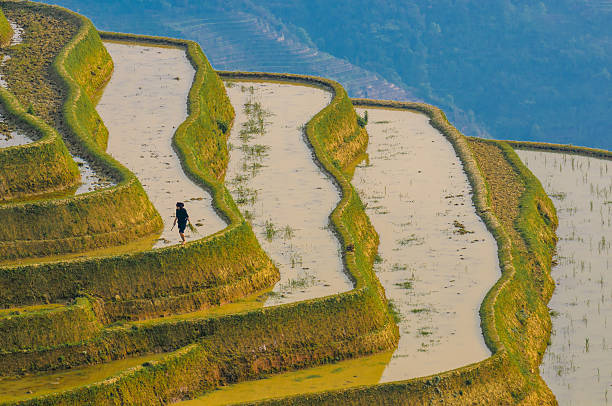
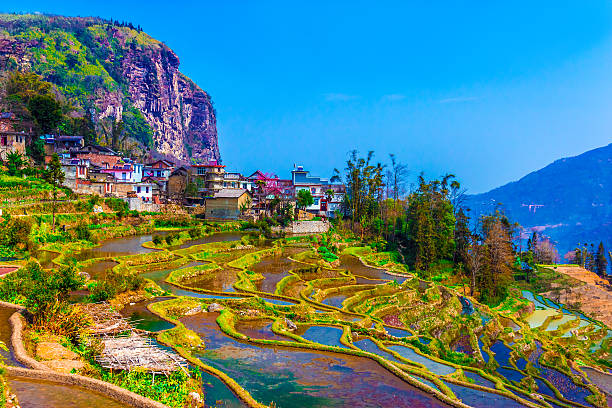
Among Yunnan’s lesser-known destinations, Yuanyang is perhaps the most visually unforgettable. It is famous for its vast rice terraces, which climb and curve across the mountains in patterns so intricate that they almost look unreal.
The beauty of Yuanyang lies in the fact that it is not simply a natural wonder. The terraces are also a cultural landscape, shaped over centuries by the Hani people. What you see here is not only scenery, but the result of a long relationship between human communities and the mountain environment.
This is what makes Yuanyang different from many famous viewpoints around the world. It is not a landscape that exists apart from people; it is a landscape created through generations of life, labor, and adaptation. Every line in the hillside, every reflection in the water, carries both ecological and cultural meaning.
For many travelers, the first impression of Yuanyang is its scale. The terraces seem endless, unfolding one after another across the hills. But the second impression is often even more powerful: the realization that this landscape is constantly changing. At sunrise, mist may drift across the fields and soften the mountain contours. As the light rises, the water-filled terraces begin reflecting silver, blue, or gold. By sunset, the same view takes on a warmer, more dramatic mood.
This constant transformation is one of the main reasons Yuanyang is so loved by photographers. It is not a place with just one “must-see” image. Instead, it rewards patience, timing, and repeated observation. Even standing at the same viewpoint at different hours can feel like seeing an entirely different landscape.
But Yuanyang is not only for photographers. It is also ideal for travelers interested in ethnic minority culture, rural life, and traditional agricultural systems. The terraces are inseparable from Hani villages and local customs, which means the destination offers more than surface beauty. It gives visitors a chance to think about how culture and environment shape each other over time.
For travelers who want a destination that feels both grand and meaningful, Yuanyang is one of the strongest hidden gems in Yunnan.
2. Mile: A Softer, Slower Side of Yunnan
If Yuanyang feels dramatic and elemental, Mile offers almost the opposite experience. This is a city that feels lighter, easier, and more relaxed. It may not be as internationally famous as Yunnan’s headline destinations, but that is part of its appeal.
Mile is a great example of a place that works especially well for travelers who are not trying to “see everything,” but instead want to enjoy a trip at a more comfortable pace. Rather than packing every hour with famous landmarks, Mile invites you to slow down and appreciate a gentler style of travel.
What makes Mile special is its holiday atmosphere. It is one of those cities where the experience is not only about major sights, but about how you feel while staying there. The pace is easier, the environment is calmer, and the travel rhythm feels less demanding. For many modern travelers—especially couples, families, or people combining sightseeing with rest—this kind of destination can be surprisingly valuable.
Mile is often associated with wellness, leisure, and short getaways. Instead of rushing from site to site, visitors can focus on staying in a comfortable resort-style hotel, enjoying hot springs, taking quiet walks, and making space for actual rest. This may sound simple, but it reflects an important shift in the way many people travel today. Increasingly, travelers are not only collecting attractions—they are also looking for places that help them feel restored.
That is where Mile stands out. It offers a side of Yunnan that feels less intense and more restorative. It can also work very well as part of a larger Yunnan itinerary. If a trip includes more active destinations like Dali, Lijiang, or even Yuanyang, Mile can serve as a place to rebalance the journey.
Another reason Mile matters in a hidden-gems article is that it broadens the image of Yunnan. Many people picture the province only in terms of ancient towns, mountains, and minority culture. Mile reminds travelers that Yunnan can also be about comfort, wellness, and ease.
For visitors who want a trip with less pressure and more breathing room, Mile is an underrated and highly practical choice.
3. Mangshi: Yunnan’s Unexpected Borderland Charm
If Yuanyang represents cultural landscape and Mile represents relaxation, Mangshi offers something else entirely: a strong sense of borderland identity and a distinctly different atmosphere from the rest of Yunnan.
Located in western Yunnan near the China–Myanmar border, Mangshi often surprises first-time visitors. Many travelers arrive expecting a typical southwest China city and instead find a place shaped by cross-border connections, ethnic diversity, tropical scenery, and architecture that can feel closer to Southeast Asia than to the classic image of inland China.
That sense of surprise is exactly what makes Mangshi so memorable.
In many cities, “exotic” style is something created for tourism. In Mangshi, however, the atmosphere feels organic. The city’s religious structures, urban rhythm, food culture, and visual identity all reflect its real geographic and historical position. This is not a destination pretending to be different—it simply is different.
For travelers, this creates a very refreshing experience. Within one province, Yunnan can already feel incredibly varied, but Mangshi pushes that diversity even further. Here, the journey becomes less about famous landmarks and more about noticing a cultural shift: the forms of local architecture, the street life, the religious influence, the flavors of the food, and the way the city feels open to neighboring regions.
Mangshi is especially appealing for travelers who enjoy destinations with a strong local personality. It is less about checking off major tourist sites and more about absorbing atmosphere. You might find yourself spending as much time wandering streets, observing daily life, or exploring food culture as visiting specific attractions.
For international travelers, Mangshi can be particularly compelling because it challenges simplistic ideas about China. It shows that China’s southwest borderlands are not culturally uniform, but full of overlap, exchange, and regional identity. That makes it not only interesting, but also educational in the best sense of the word.
For those who have already seen Yunnan’s better-known destinations and want something genuinely different, Mangshi is one of the most rewarding places to consider.
Why These Three Destinations Matter
What makes Yuanyang, Mile, and Mangshi such a strong trio is that they are not variations of the same travel experience. Instead, each one opens a different dimension of Yunnan.
-
Yuanyang is for travelers drawn to landscape, heritage, and rural culture
-
Mile is for those who value relaxation, comfort, and slower travel
-
Mangshi is for visitors curious about borderland life, ethnic diversity, and Southeast Asian influence
Together, they reveal something essential about Yunnan: the province is not defined by one type of beauty or one type of trip. Its richness comes from contrast.
These destinations also share several practical advantages. They are generally less crowded than Yunnan’s most famous cities, they often provide a more authentic atmosphere, and they allow travelers to step outside the most commercialized routes. For people seeking more original experiences in China, that combination is hard to beat.
The real magic of Yunnan is not limited to its biggest names. It lives just as strongly in places that many travelers have never considered.
Yuanyang shows the extraordinary beauty of a living cultural landscape.
Mile offers a softer and more restorative style of travel.
Mangshi reveals a borderland world shaped by cultural exchange and regional identity.
For travelers who want to experience a deeper, more surprising side of southwest China, these three hidden gems are an excellent place to begin.