Lhasa is often described as a city of sunlight, sacred mountains, and ancient devotion. Yet when the evening arrives, another side of the city begins to reveal itself. Among all the things to do in Lhasa at night, Tibetan singing and dancing shows stand out as one of the most authentic and enjoyable experiences. These performances are not only entertaining; they also offer a glimpse into Tibetan identity, artistic tradition, and the way local people celebrate life. In Lhasa, these venues are often known as Langma halls, a cultural form that has evolved from a more exclusive entertainment style into a popular social experience open to visitors and residents of all ages.
What Makes Lhasa Night So Special
Lhasa is not a city that rushes through its evenings. Instead, it invites you to slow down and absorb the atmosphere. The altitude, the light, the mountain air, and the spiritual character of the city all influence how night feels here. Unlike large metropolitan nightlife scenes dominated by bars, clubs, or shopping malls, Lhasa’s entertainment culture carries a strong sense of heritage. Even when the performances are modern in style, they still reflect local traditions.
For many travelers, the appeal lies in contrast. After a day spent visiting the Potala Palace, Jokhang Temple, Barkhor Street, or the surrounding mountains, an evening performance offers a softer and more festive experience. You can enjoy music, watch colorful dance routines, and feel the energy of local culture in a setting that is welcoming and easy to enjoy.
Tibetan nightlife is also a social experience. In many venues, guests are not just spectators. They may be invited to clap along, join in a circle dance, or enjoy food and drinks while watching the performance. This makes the experience more interactive and memorable than a typical theater show.
Understanding Langma Halls In Lhasa
The term Langma Hall refers to a distinctive Tibetan entertainment venue centered on singing and dancing. Historically, Langma performances were associated with elite or official settings, but over time they became more widely enjoyed and gradually developed into popular cultural entertainment spaces. Today, Langma halls in Lhasa are known for blending traditional Tibetan artistic elements with a lively public atmosphere.
A Langma hall is usually more than a stage. It is often a place where music, dance, dining, and social interaction happen together. Guests may watch professional performers, eat Tibetan dishes, drink tea or beer, and enjoy a festive evening with friends or family. The atmosphere is usually colorful, warm, and energetic, making it suitable for travelers who want to experience local culture in a more direct way.
What makes Langma halls especially appealing to international visitors is the variety. Some venues are elegant and polished, while others feel more casual and community-oriented. Some focus on heritage performance, while others include modern and even experimental elements. No matter the style, the common thread is Tibetan cultural expression.
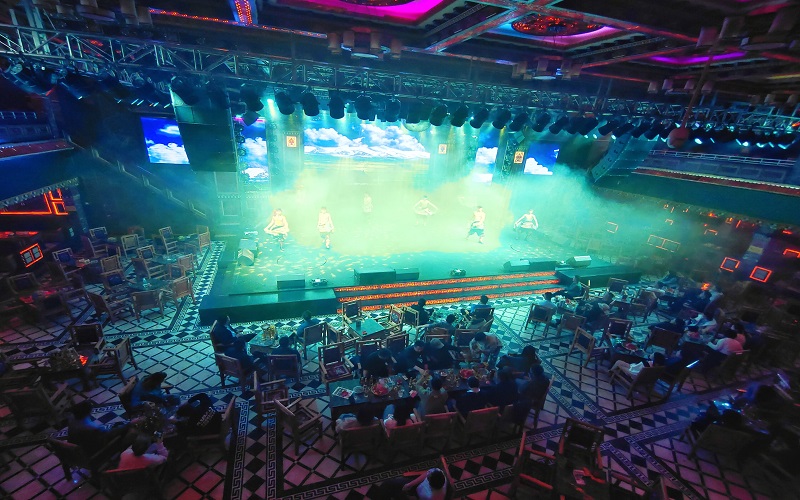
Langma Halls In Lhasa
The Most Famous Tibetan Singing And Dancing Venues In Lhasa
Lhasa has several well-known venues where visitors can enjoy Tibetan singing and dancing shows. Each one has its own character, atmosphere, and performance style. Choosing the right venue depends on what kind of evening you want.
Tang Gu La Feng Singing And Dancing Show
Among the best-known Langma halls in Lhasa, Tang Gu La Feng Singing and Dancing Show is often considered one of the most luxurious and professional performance centers in the city. Located inside Grand Hotel Tibet, it has become a popular destination for visitors who want a more polished stage production while still enjoying authentic Tibetan artistic elements.
What makes Tang Gu La Feng attractive is its range of performances. Guests can expect a mix of traditional songs, folk customs, Tibetan opera elements, and dance performances. The production values are generally high, which makes it suitable for travelers who appreciate a more refined setting. The show is also convenient for tourists staying in central Lhasa, since the venue is located on Beijing Road Middle.
The performance schedule makes it flexible for different travel plans. It is possible to attend at midday or in the evening, and the nighttime shows are especially popular with visitors who want an energetic cultural experience after dinner.
For travelers who want a venue that feels both elegant and rooted in Tibetan culture, Tang Gu La Feng is one of the strongest options in the city.
Tang Gu La Feng Singing And Dancing Show
Rong Zhong Er Jia Perform Center
Rong Zhong Er Jia Perform Center is another highly popular Langma hall in Lhasa. It is closely associated with the famous Tibetan singer Rong Zhong Er Jia, which gives the venue a strong cultural identity and a sense of authenticity. Since its establishment in 2004, it has played an important role in shaping modern Lhasa nightlife.
This venue covers a large area and can accommodate many guests at once, making it lively and energetic. It is especially appealing for travelers who enjoy a busy, social atmosphere rather than a quiet, formal show. With balconies, private rooms, Tibetan food, and participatory performances, it offers a complete night out rather than just a one-hour performance.
The center is known for creating a sense of engagement. The performances are often artistic and playful, and the audience feels included in the experience. For many international tourists, this makes the venue especially memorable because it offers both entertainment and cultural immersion.
If your goal is to see how contemporary Tibetan nightlife combines performance, hospitality, and local spirit, Rong Zhong Er Jia Perform Center is a strong choice.
Xin Shi Ji Langma Hall
Xin Shi Ji Langma Hall, also known as the New Century Langma Hall, is one of the largest venues of its kind in Lhasa. Situated on Beijing Road East, it has become a favorite place for both locals and visitors. The hall is known for its lively atmosphere, which usually fills up every evening.
One reason Xin Shi Ji stands out is its broad appeal. It is not only for young people. Families, older guests, and children often attend together, which gives the venue a more inclusive feeling. The hall combines performances with drinking, dining, and socializing, so it often feels less like a traditional theater and more like a community celebration.
The shows here may include traditional elements as well as modern and unusual performances, which makes the program more varied. For travelers who enjoy variety and want to see a cross-section of local nightlife, Xin Shi Ji is especially worth considering.
This venue is a good choice for those who want a lively, everyday Lhasa experience rather than a highly formal stage production.
Why Tibetan Singing And Dancing Shows Are Worth Watching
There are many ways to spend an evening in a travel destination, but Tibetan singing and dancing shows offer something more meaningful than simple amusement. They allow travelers to engage with local culture through performance, and they reveal how the Tibetan people express joy, devotion, beauty, and community.
Music and dance are deeply woven into Tibetan life. They appear in celebrations, festivals, family gatherings, religious and social events, and everyday recreation. A performance in Lhasa therefore does not feel artificially created just for tourists. In many cases, it reflects forms of expression that are already part of local cultural life.
Another reason these shows are worth watching is that they are visually unforgettable. The costumes are often bright and richly detailed. The songs may use traditional melodies, modern arrangements, or dramatic vocal styles. The dances can be graceful, powerful, or communal, depending on the theme of the performance. For international tourists who may not understand the language, the emotional language of the performance is still easy to feel.
This is one of the most valuable qualities of a good cultural show: even without translation, it communicates something real.
Happiness Is On The Road: A Large-Scale Tibetan Performance
Among the most ambitious cultural performances connected with Lhasa night entertainment is Happiness Is On The Road, a large-scale Tibetan poetic singing and dancing production. It is designed as a panoramic stage work that presents the theme of happiness and harmony through a poetic interpretation of Tibetan art.
This type of performance is especially appealing to visitors who want something more theatrical and visually immersive. The production uses multiple angles, layered stage space, lighting effects, music, and costume design to create a dreamlike atmosphere. The overall effect is elegant, mysterious, and serene, while still feeling lively and emotionally rich.
Rather than presenting a simple sequence of dances, the show builds a broader artistic world. It gives audiences a chance to experience Tibetan aesthetics in a more dramatic form. For travelers who enjoy stage art and large productions, this is an excellent addition to a Lhasa evening.
Guozhuang Dance: The Heartbeat Of Tibetan Evening Culture
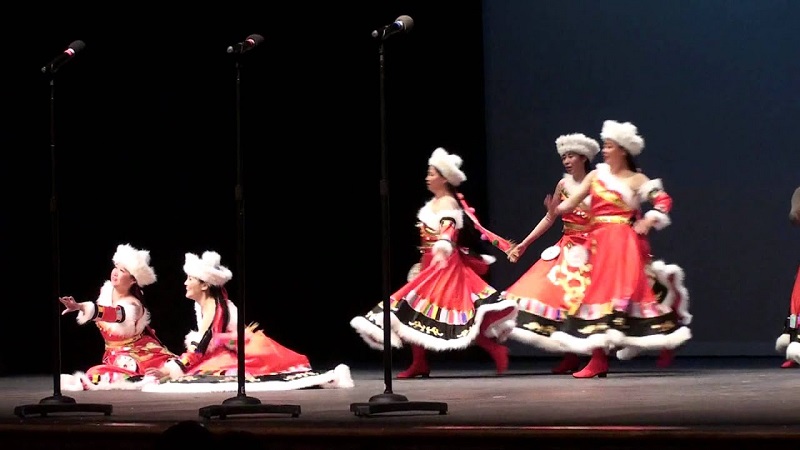
No guide to Lhasa night performances would be complete without mentioning Guozhuang dance. This is one of the most beloved forms of Tibetan collective dance, and it has a history of more than a thousand years. In many ways, it represents the spirit of Tibetan joy, togetherness, and celebration.
Guozhuang dance is often performed outdoors around a central fire or in open spaces during festivals, holidays, harvest celebrations, or leisure time. The dance is collective and usually unaccompanied, though music may be added in modern settings. Participants stand in a circle, often hand in hand or arm in arm, and move together in a unified rhythm.
The structure of the dance is simple enough that it can be enjoyed by people of different ages and backgrounds. Men and women may stand on different sides of the circle, and the movement usually follows a flowing, coordinated pattern. The result is not just a performance but a shared social experience.
For travelers, seeing Guozhuang dance in Lhasa is one of the best ways to feel the living pulse of Tibetan culture. It is energetic, warm, and welcoming. Even if you do not join in, watching it can help you understand why music and dance remain so important in Tibetan communities.
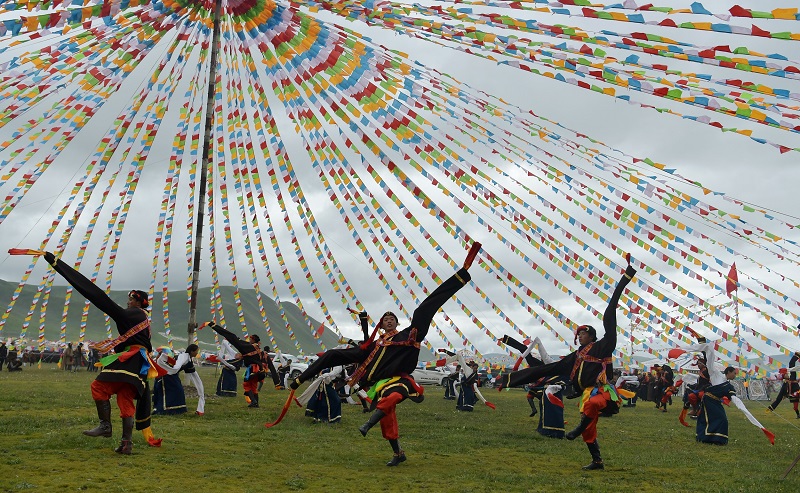
Guozhuang Dance
The Cultural Meaning Behind The Performances
The entertainment scene in Lhasa is not only about having fun after dark. It also reflects the values, identity, and aesthetic traditions of Tibetan people. A singing and dancing show in Lhasa is a reminder that culture is not something stored only in museums or temples. It is alive in the way people celebrate, gather, and express themselves.
Tibetan performances often emphasize harmony with nature, community togetherness, spiritual feeling, and emotional sincerity. The costumes, instruments, gestures, and vocal styles all carry symbolic meaning. In many cases, the performances blend sacred atmosphere with joyful energy, which creates a unique emotional tone.
For international visitors, this cultural depth is one of the biggest reasons to attend. A performance may seem entertaining on the surface, but the longer you watch, the more you notice the layers beneath it. The pride in local identity, the importance of music in everyday life, and the strong connection between art and social ritual all become visible.
This is why Lhasa night entertainment feels different from nightlife in many other cities. It is not only about spending the evening. It is about understanding the city through its living culture.
What International Tourists Can Expect During A Night Out
If you are visiting Lhasa for the first time, a night performance may feel like one of the easiest cultural activities to enjoy. The environment is usually relaxed, and you do not need to understand Tibetan language to appreciate the show. The performances are designed in a way that allows visitors from different countries to follow the mood, music, and visual storytelling.
Most venues offer an atmosphere that is welcoming to outsiders. Guests can usually sit, eat, drink, and watch the performance comfortably. In some places, there may be opportunities to join in or interact with performers. This makes the experience more personal than watching from a distance.
Another benefit is that the venues often provide a fuller picture of Tibetan life than a daytime sightseeing stop alone can offer. You will not only see traditional clothing and dance. You will also observe how local people spend time together, how they enjoy music, and how entertainment fits into social life.
For travelers who like cultural travel, this is a meaningful and enjoyable way to end the day.
Practical Tips For Enjoying Lhasa Night Performances
A few simple tips can help you make the most of a night out in Lhasa.
First, choose the venue based on your travel style. If you want a more refined and polished experience, Tang Gu La Feng may suit you well. If you prefer a lively and social atmosphere, Rong Zhong Er Jia or Xin Shi Ji may be better. If you want a large theatrical production, Happiness Is On The Road is worth considering.
Second, plan your evening around your sightseeing schedule. Since many performances begin after dinner or even in the late evening, they fit well after a full day of exploring the city.
Third, dress comfortably but warmly. Lhasa evenings can feel cool, especially depending on the season. Even in places with indoor seating, temperature changes can be noticeable after dark.
Fourth, keep an open mind. Some performances may feel more traditional, while others are more commercial or modern. The best experience often comes when you appreciate the differences rather than expecting every show to be the same.
Finally, remember that the purpose of the evening is not just entertainment. It is also a chance to observe how the city expresses itself in a joyful, communal way.
Why Lhasa Night Entertainment Is A Must For First-Time Visitors
If you are visiting Lhasa for the first time, daytime sightseeing will likely leave a strong impression. But the night performances can complete the experience in a way that daytime monuments alone cannot. They show a side of the city that is more relaxed, social, and expressive.
For many travelers, the most memorable part of a trip is not just what they see, but how a place feels. Lhasa after dark often feels warm, artistic, and deeply human. The combination of singing, dancing, food, costume, and atmosphere creates a sense of presence that is hard to forget.
Whether you are interested in Tibetan opera elements, folk-style music, modern stage shows, or the communal beauty of Guozhuang dance, the city offers a range of night entertainment that suits different tastes. This variety is one reason Lhasa remains such a special destination for international tourists.
Final Thoughts On Lhasa Night Performances
Lhasa’s nighttime entertainment is an essential part of understanding the city’s cultural charm. From the elegant stage presentations at Tang Gu La Feng to the lively social atmosphere at Rong Zhong Er Jia and Xin Shi Ji, the city offers a rich range of Tibetan singing and dancing experiences. Add to that the grandeur of larger productions like Happiness Is On The Road and the timeless appeal of Guozhuang dance, and you begin to see how vibrant Lhasa becomes after sunset.
For international travelers, these performances are more than a pleasant evening activity. They are a bridge into Tibetan culture, offering music, movement, and community in a way that feels both accessible and authentic. If you are planning a trip to Tibet and want to experience the city beyond its temples and landmarks, Lhasa night performances should be high on your list.
Journey2tibet can help international visitors arrange a smoother and more enriching Tibet journey, including cultural experiences that highlight the best of Lhasa after dark. From choosing the right show to building a well-balanced itinerary, a thoughtful travel plan can make your time in Lhasa even more rewarding.