For more than 1,300 years, Jokhang Temple has stood at the center of Tibetan religious life, attracting pilgrims, monks, and travelers from across the world. Located in the heart of Lhasa’s Old Town at an altitude of 3,650 meters (12,000 feet), Jokhang Temple is widely regarded as the holiest temple in Tibet and one of the most important Buddhist sites in the Himalayas.
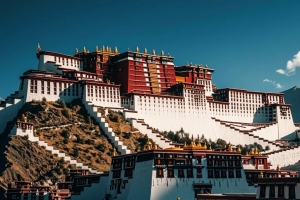
While the majestic Potala Palace often dominates travel photographs of Lhasa, many Tibetans consider Jokhang Temple to be even more significant. It is here that countless pilgrims complete their spiritual journeys, prostrating themselves along Barkhor Street before entering the temple to pay homage to Jowo Rinpoche, the most revered Buddha statue in Tibet.
A visit to Jokhang Temple offers far more than a sightseeing experience. It provides a rare opportunity to witness living Tibetan Buddhism, centuries-old traditions, remarkable architecture, and the deep faith that continues to shape daily life on the Tibetan Plateau.
Why Jokhang Temple Is The Spiritual Heart Of Tibet
Jokhang Temple occupies a unique place in Tibetan culture and religion. For Tibetans, it is not merely a historic building but the spiritual center of their world.
The temple is situated in the center of Lhasa’s Old Town, surrounded by the famous Barkhor Street pilgrimage circuit. In fact, the area around Jokhang Temple was once referred to by Tibetans as “Lhasa,” meaning “Holy Land” or “Land of the Buddha.” This illustrates the temple’s extraordinary importance long before modern Lhasa expanded into the city visitors see today.
Every day, pilgrims from all corners of Tibet travel hundreds or even thousands of kilometers to visit Jokhang Temple. Many perform full-body prostrations along Barkhor Street before entering the temple. Some have spent months traveling across mountains and valleys to reach this sacred destination.
Inside and outside the temple, the scent of burning incense and yak butter lamps fills the air. Continuous chanting, spinning prayer wheels, and the steady flow of worshippers create an atmosphere unlike anywhere else in Tibet.
For travelers seeking an authentic cultural experience, Jokhang Temple provides one of the most powerful introductions to Tibetan Buddhism and local life.
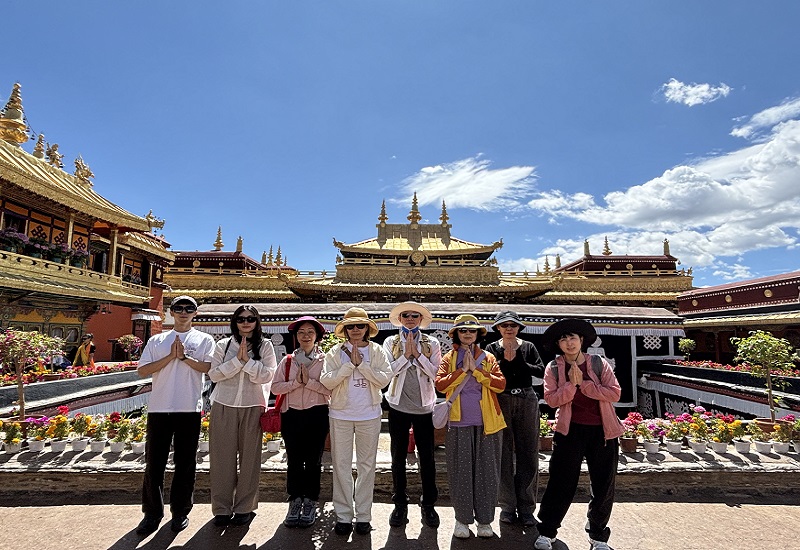
Jokhang Temple Tourists
The History Of Jokhang Temple
The history of Jokhang Temple is closely connected to the rise of the Tibetan Empire and the introduction of Buddhism to Tibet.
The Founding Of Jokhang Temple
Construction of Jokhang Temple is believed to have begun between 639 and 647 AD during the reign of the great Tibetan king Songtsen Gampo. At the time, Buddhism was beginning to spread across Tibet, and the king sought to establish major religious institutions that would strengthen the faith throughout his kingdom.
The temple was originally built to house a sacred Buddha statue brought to Tibet by Princess Bhrikuti, a Nepalese princess who married Songtsen Gampo. This important religious image became one of the earliest Buddhist treasures in Tibet.
At the same time, another important temple, Ramoche Temple, was constructed nearby to house a second sacred Buddha statue brought by Princess Wencheng from the Tang Dynasty of China.
Together, these royal marriages played a crucial role in introducing Buddhist culture, art, and architecture to Tibet.
The Role Of Princess Wencheng And Princess Bhrikuti
Princess Bhrikuti and Princess Wencheng are remembered as two of the most influential figures in early Tibetan Buddhist history.
According to historical records and local traditions, Princess Bhrikuti brought an eight-year-old life-sized Buddha statue, while Princess Wencheng brought a twelve-year-old life-sized statue of Shakyamuni Buddha.
After the death of Songtsen Gampo, it is believed that Princess Wencheng moved the twelve-year-old statue from Ramoche Temple to Jokhang Temple to protect it during a period of instability. The statue has remained there ever since and became known as Jowo Rinpoche.
Today, this sacred image continues to attract pilgrims from across Tibet and beyond.
The Survival And Restoration Of The Temple
Over its long history, Jokhang Temple has experienced periods of prosperity, renovation, and destruction.
The temple underwent multiple expansions and restorations during successive Tibetan dynasties. However, one of the most difficult periods occurred during the Cultural Revolution in the 1960s, when significant damage was inflicted on many religious sites throughout Tibet.
Jokhang Temple suffered destruction in 1966, but restoration work began in the early 1970s. Extensive renovations continued through the 1980s, preserving much of the temple’s historical and religious significance.
Today, Jokhang Temple remains one of the best-preserved and most important cultural landmarks in Tibet.
Jowo Rinpoche: The Most Sacred Buddha Statue In Tibet
The single most important attraction inside Jokhang Temple is Jowo Rinpoche, a life-sized statue of Shakyamuni Buddha.
For Tibetans, this is not simply an artistic masterpiece but the most sacred Buddhist image in the entire region.
According to tradition, the statue was created during the lifetime of Buddha Shakyamuni and is considered the most accurate representation of his appearance. It depicts the Buddha at the age of twelve and is believed to have been blessed directly by the Buddha himself.
The statue is enshrined within the temple’s innermost sanctuary, where pilgrims gather to offer prayers, butter lamps, ceremonial scarves, and other devotional offerings.
Many Tibetans believe that seeing Jowo Rinpoche can generate spiritual merit, strengthen faith, and bring blessings. As a result, countless pilgrims consider a visit to Jokhang Temple the ultimate goal of their religious journey.
Even for travelers who are not religious, witnessing the devotion surrounding Jowo Rinpoche offers a profound insight into the spiritual life of Tibet.
The Legends Behind Jokhang Temple
Like many ancient religious sites, Jokhang Temple is surrounded by fascinating legends that blend history, mythology, and spiritual symbolism.
The Sacred Ring And The Lake
One of the most famous stories tells of a large lake that once occupied the site where Jokhang Temple now stands.
According to legend, King Songtsen Gampo promised Princess Bhrikuti that he would build a temple wherever her ring landed. When he threw the ring, it landed in the middle of the lake.
At that moment, a brilliant light appeared, and a nine-story white stupa emerged from the water. Seeing this as a divine sign, the king ordered the construction of a temple at that exact location.
Thousands of white goats were reportedly used to transport soil and fill the lake, creating a stable foundation for the temple.
The Demoness Of Tibet
Another popular legend involves Princess Wencheng and a giant demoness believed to be lying across the Tibetan Plateau.
According to traditional geomancy, the lake beneath Jokhang Temple represented the demoness’s heart. Princess Wencheng advised that the lake should be filled and a temple built upon it to stabilize the land and bring harmony to Tibet.
She also recommended constructing twelve additional temples across the region to pin down the demoness’s limbs and joints.
Although mythical, these stories continue to play an important role in Tibetan cultural traditions and religious beliefs.
Architectural Highlights Of Jokhang Temple
Jokhang Temple is not only a sacred religious site but also one of the finest examples of Tibetan architecture.
Covering more than 25,000 square meters, the temple complex contains over twenty chapels, halls, and sacred spaces.
A Unique Blend Of Architectural Traditions
One of Jokhang Temple’s most remarkable features is its combination of architectural influences from Tibet, China, Nepal, and India.
The temple reflects the cultural exchanges that occurred during the early spread of Buddhism across the Himalayas. Visitors can observe Tibetan structural elements alongside artistic details inspired by Newari craftsmen from Nepal and influences from Tang Dynasty China.
This fusion of styles later became a model for many Tibetan Buddhist monasteries.
The Golden Roof
The temple’s gilded rooftop is one of its most recognizable features.
From the rooftop terraces, visitors can enjoy panoramic views of Barkhor Street, the surrounding Old Town, and the distant Potala Palace. The golden roofs and ornate decorations create one of the most photographed scenes in Lhasa.
Ancient Pillars And Murals
Inside the temple, several original wooden pillars and carved arches dating back to the seventh century still survive.
Visitors can also admire centuries-old murals depicting Buddhist teachings, historical events, royal figures, and religious legends. These artworks offer valuable insights into Tibetan history and spiritual traditions.
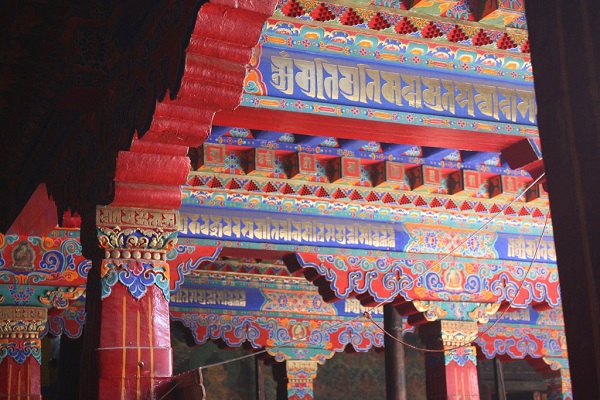
Jokhang Temple
What To See Inside Jokhang Temple
A visit to Jokhang Temple reveals a treasure trove of religious art and sacred relics.
Jowo Rinpoche Hall
The temple’s most important shrine and primary pilgrimage destination.
Butter Lamp Chapels
Rows of flickering butter lamps create a peaceful and deeply spiritual atmosphere.
Ancient Murals
Many walls are covered with beautifully preserved paintings illustrating Buddhist stories and Tibetan history.
Prayer Halls
Large assembly halls host religious ceremonies and daily prayers by monks and pilgrims.
Rooftop Viewing Area
A favorite location for photography and panoramic views of central Lhasa.
The Pilgrimage Experience Around Barkhor Street
No visit to Jokhang Temple is complete without walking Barkhor Street.
This ancient circular route surrounds the temple and serves as Tibet’s most famous pilgrimage path. Throughout the day, pilgrims walk clockwise around the circuit while spinning prayer wheels and reciting mantras.
The route is lined with traditional Tibetan houses, handicraft shops, tea houses, and local markets. It offers visitors a wonderful opportunity to experience daily Tibetan life while observing one of the world’s oldest living pilgrimage traditions.
Early morning and late afternoon are often considered the best times to walk Barkhor Street, when the atmosphere is especially vibrant.
Best Time To Visit Jokhang Temple
Jokhang Temple can be visited throughout the year, making it one of Tibet’s most accessible attractions.
Spring (March To May)
Pleasant temperatures and fewer tourists make spring an excellent season for sightseeing.
Summer (June To August)
The warmest period of the year, ideal for combining Jokhang Temple with other destinations across Tibet.
Autumn (September To October)
Often considered the best season due to clear skies, comfortable weather, and excellent photography conditions.
Winter (November To February)
Fewer crowds and a more authentic local atmosphere provide a unique cultural experience.
Attractions Near Jokhang Temple
Many of Lhasa’s top attractions are located within easy reach of Jokhang Temple.
Barkhor Street
The city’s most famous pilgrimage route and shopping district.
Ramoche Temple
An important historic monastery closely connected to Jokhang Temple’s origins.
Drepung Monastery
Once the largest monastery in the world and a major center of Tibetan Buddhism.
Norbulingka
The traditional summer residence of the Dalai Lamas.
Lhasa Old Town
A fascinating area filled with traditional Tibetan architecture and local culture.
Canggu Nunnery
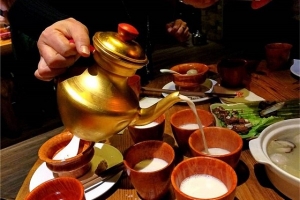
A peaceful nunnery known for its spiritual atmosphere and traditional Tibetan tea.
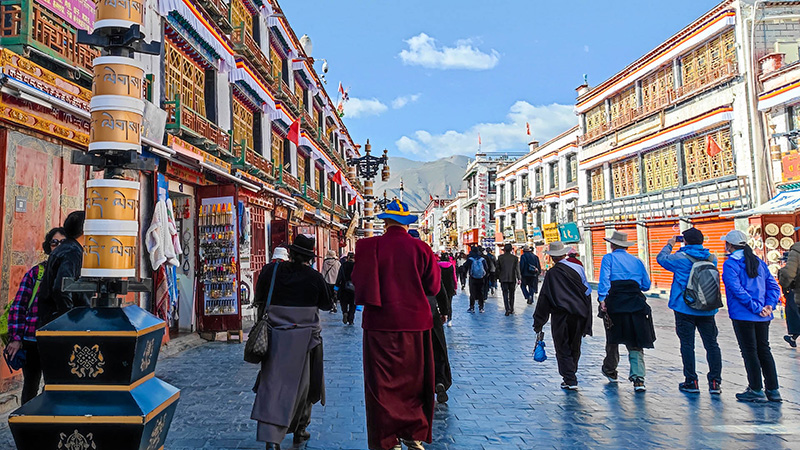
Barkhor Street
Why Visit Jokhang Temple With TibetYulong
For international travelers, understanding the cultural and religious significance of Jokhang Temple can greatly enhance the experience.
TibetYulong specializes in helping visitors explore Tibet’s most important heritage sites through carefully designed cultural journeys. Experienced local guides provide valuable insights into the temple’s history, Buddhist traditions, architecture, and living pilgrimage culture that many visitors might otherwise overlook.
Whether you are visiting Lhasa for the first time or exploring Tibet as part of a longer Himalayan adventure, Jokhang Temple remains an essential destination that reveals the true spiritual essence of Tibet.