Korla may not be as famous as Kashgar or Turpan, but it is one of the most important cities for exploring Southern Xinjiang. Located on the northern edge of the Tarim Basin and surrounded by deserts, rivers, and mountains, Korla combines modern city life with the unique landscapes and cultures of China’s far west. It is also a major transportation hub, making it an ideal starting point for adventures across Southern Xinjiang. Whether you’re interested in Silk Road history, desert scenery, or local food, Korla deserves more than just a quick stopover.
Where Is Korla?
Korla is the capital of the Bayingolin Mongol Autonomous Prefecture in Xinjiang Uyghur Autonomous Region.
The city lies between the Tianshan Mountains and the vast Taklamakan Desert, with the Kongque (Peacock) River flowing through its center. Thanks to its strategic location, Korla has long been an important oasis settlement and a key stop along ancient trade routes.
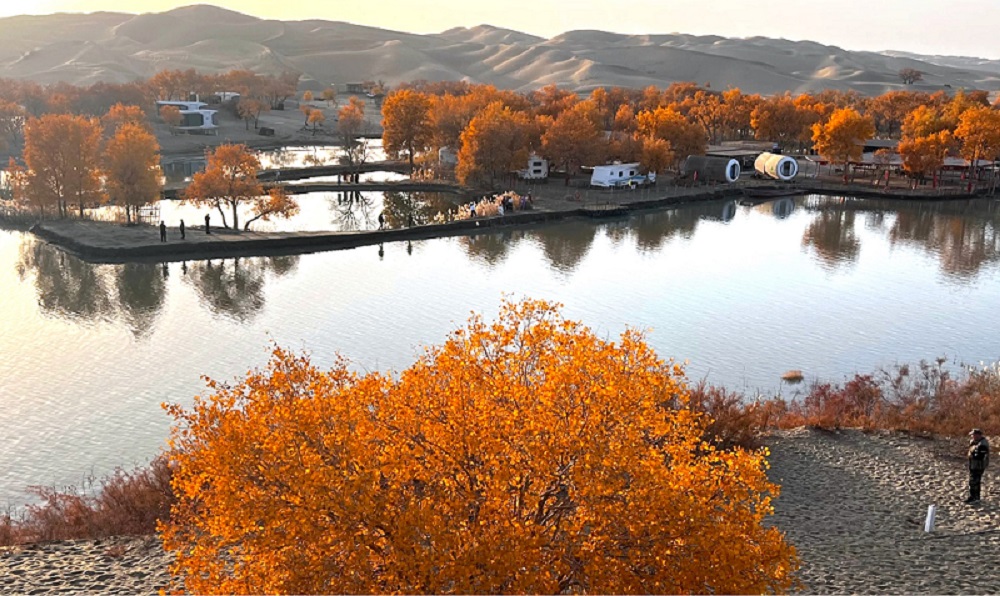
Korla
Today, Korla is connected by high-speed rail, regular trains, highways, and flights, making it one of the easiest cities to reach in Southern Xinjiang.
Many travelers use Korla as a gateway to explore the region’s natural and cultural attractions.
Why Visit Korla?
Compared with some of Xinjiang’s more famous destinations, Korla offers a quieter and more relaxed atmosphere.
The city is known for:
- Beautiful oasis scenery
- Silk Road history
- Easy transportation
- Local Uyghur and Mongolian cultures
- Famous Korla fragrant pears
- Access to major attractions in Southern Xinjiang
Rather than rushing through the city, spending a day or two in Korla provides an opportunity to experience a different side of Xinjiang.
Stroll Along the Peacock River
The Peacock River is the heart of Korla and one of the city’s most popular attractions.
Unlike many oasis cities surrounded by dry landscapes, Korla has a pleasant riverside environment with parks, walking paths, and illuminated bridges.
Visitors can enjoy:
- Evening walks
- Riverside cafés
- Night views
- Local parks
- Relaxed city atmosphere
At sunset, the riverbanks become a favorite gathering place for both locals and visitors.
The Peacock River demonstrates why Korla is often called an oasis city.
Explore the Ancient Silk Road Heritage
Korla has a long history connected with the Silk Road.
For centuries, merchants traveling between Central Asia and China passed through this region, carrying goods, cultures, and ideas.
Nearby historical sites include:
- Ancient beacon towers
- Old caravan routes
- Historical ruins
- Traditional oasis settlements
Although many travelers focus on Kashgar or Turpan for Silk Road history, Korla provides valuable insight into the trade networks that once crossed the Tarim Basin.
Visit Bosten Lake
One of the most popular day trips from Korla is Bosten Lake.
As China’s largest inland freshwater lake, Bosten Lake offers a surprising contrast to the surrounding desert landscapes.
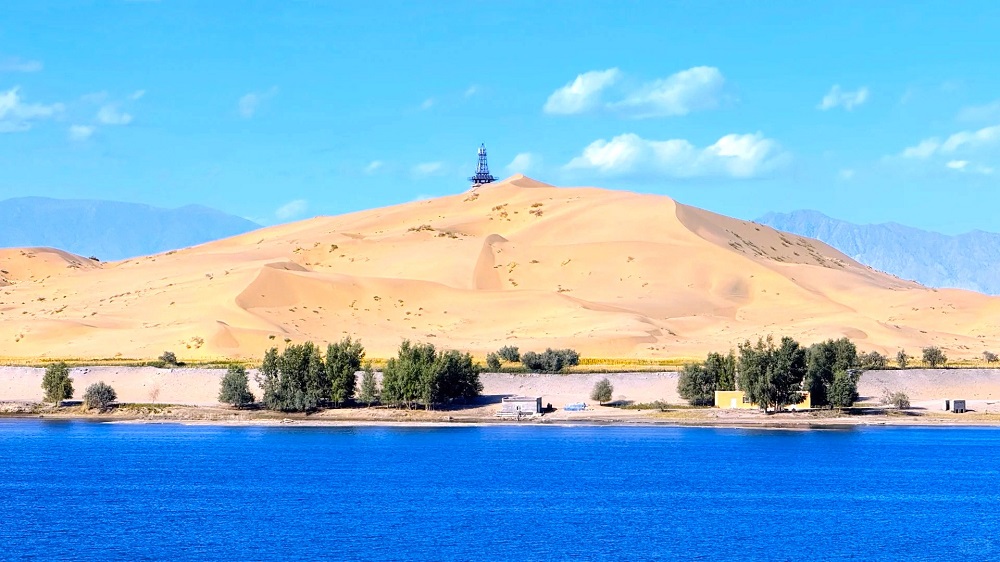
Bosten Lake
Visitors can enjoy:
- Sandy beaches
- Wetlands
- Boat rides
- Birdwatching
- Beautiful sunsets
During summer, the lake provides a cool escape from the hotter desert regions.
The area is also known for its fresh fish and local cuisine.
Discover the Taklamakan Desert
Korla serves as one of the gateways to the famous Taklamakan Desert.
Known as one of the world’s largest shifting-sand deserts, the Taklamakan offers unforgettable desert landscapes.
Popular experiences include:
- Desert highways
- Sand dunes
- Camel rides
- Sunset photography
- Starry night skies
The contrast between Korla’s green oasis and the surrounding desert is one of the city’s most fascinating features.
Taste the Famous Korla Fragrant Pears
Korla is famous throughout China for its fragrant pears.
The fruit has been cultivated in the region for centuries and is known for its crisp texture and sweet flavor.
Depending on the season, visitors can:
- Visit pear orchards
- Sample fresh fruit
- Buy local products
- Learn about regional agriculture
For many travelers, tasting authentic Korla pears becomes an unexpected highlight of the trip.
Experience Local Food and Culture
Korla reflects the cultural diversity of Xinjiang.
Local restaurants and markets offer a variety of traditional foods influenced by Uyghur, Mongolian, Hui, and Han cultures.
Popular dishes include:
- Lamb kebabs
- Hand-pulled noodles
- Pilaf
- Nang bread
- Yogurt drinks
Walking through local markets is one of the best ways to experience everyday life in the city.
Best Time to Visit Korla
Korla can be visited year-round, but spring and autumn are generally the most comfortable seasons.
Spring (April to May)
- Mild temperatures
- Blooming orchards
- Pleasant sightseeing weather
Summer (June to August)
- Fruit harvest season
- Bosten Lake activities
- Long daylight hours
Autumn (September to October)
- Pear harvest
- Comfortable temperatures
- Clear skies
Winter (November to March)
- Fewer tourists
- Quiet city atmosphere
- Unique desert scenery
Autumn is often considered the best season for combining sightseeing and local food experiences.
How to Include Korla in a Southern Xinjiang Trip
Korla fits naturally into many Southern Xinjiang itineraries.
Popular travel routes connect Korla with:
- Urumqi
- Turpan
- Kuqa
- Aksu
- Kashgar
- Taklamakan Desert Highway
Because of its transportation links, Korla is an excellent place to begin or break up a longer journey across Xinjiang.
Many organized Southern Xinjiang tours also include the city.
Why Korla Is More Than a Stopover
Many travelers pass through Korla on their way to other destinations, but the city offers much more than convenient transportation. With its oasis landscapes, Silk Road heritage, beautiful Peacock River, nearby Bosten Lake, and access to the Taklamakan Desert, Korla provides an excellent introduction to Southern Xinjiang.
For travelers looking to explore a less crowded side of Xinjiang while enjoying authentic local culture and natural scenery, Korla is well worth adding to the itinerary.